Female carpenter bees excavate precise 0.5-inch circular entry holes into unfinished softwood, turning 90 degrees along the wood grain to hollow out brood galleries measuring 6 to 12 inches deep. In Atlanta…
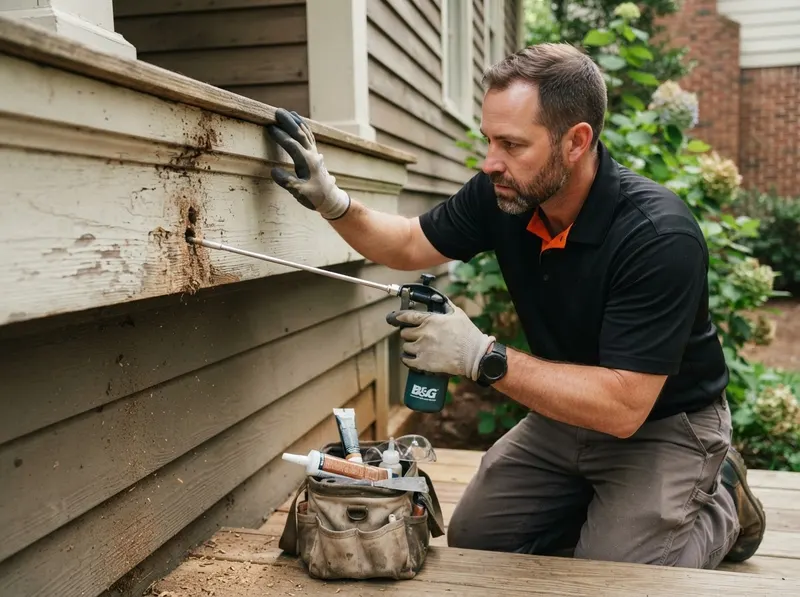
Female carpenter bees excavate precise 0.5-inch circular entry holes into unfinished softwood, turning 90 degrees along the wood grain to hollow out brood galleries measuring 6 to 12 inches deep. In Atlanta neighborhoods like Inman Park, Grant Park, and Virginia-Highland, historic Craftsman overhangs, open rafter tails, and heart-pine porch headers sustain repeated yearly attacks. Unchecked galleries invite moisture intrusion during Fulton County humid summer spells, which accelerates fungal decay and provokes secondary attacks by pileated woodpeckers that hammer open entire joists to reach bee larvae inside the wood grain. Hardware store aerosols fail because pressurized liquid sprays trigger immediate defensive retreat deeper into structural timbers without coating the vertical nesting chambers, leaving pupating larvae unmanaged inside sealed chambers.
Methodical void sealing prioritizes low-toxicity desiccating dusts and pyrethroid micro-injections directly into gallery tunnels rather than widespread perimeter fogging. Injecting treatment deep into each void allows returning adults and emerging nymphs to encounter the active material mechanically, neutralizing the reproductive cycle within the tunnel network. Technicians allow the active ingredient 24 to 72 hours of dwell time before returning to seal each portal with tight-grain wooden dowels set in exterior adhesive, followed by weatherproofing silicone sealant. This structural protocol protects historic properties in Ansley Park and Buckhead, preserving architectural millwork without dousing domestic living spaces, pet runs, or home gardens in non-targeted chemical sprays.
1. Technicians visually map every active flight path, entry bore, and frass staining pattern across eaves, fascias, and outbuildings.
2. Specialized nozzles deliver pressurized micro-fine dust 8 to 12 inches deep along the grain path of each active nesting gallery.
3. The property remains undisturbed for 24 to 48 hours to ensure returning females and newly emerging adults contact the internal residue.
4. Technicians insert structural hardwood plugs into every confirmed hole, sealing them flush with water-resistant exterior wood matrix.
5. Unfinished softwoods receive an application of exterior wood preservative containing copper naphthenate or borate salts to prevent future boring attempts.
Property owners facing minor surface probing can choose targeted single-fascia repairs, whereas properties with multi-season excavations require comprehensive gallery sealing across the entire eaves line. While localized plugging saves money upfront, untreated adjacent timbers frequently sustain new bore holes the following spring, shifting the problem across the fascia rather than solving it permanently.
Every job gets a firm, written price after a free on-site visit.
Tell us about your carpenter bee wood preservation and gallery void sealing job in Atlanta and we'll send a clear, written quote, usually the same day.
 Brass Lantern Pest Control