Smokybrown cockroaches (Periplaneta fuliginosa) and German cockroaches (Blattella germanica) require entirely different eradication protocols due to distinct biological nesting behaviors. German cockroaches measure 0.5…
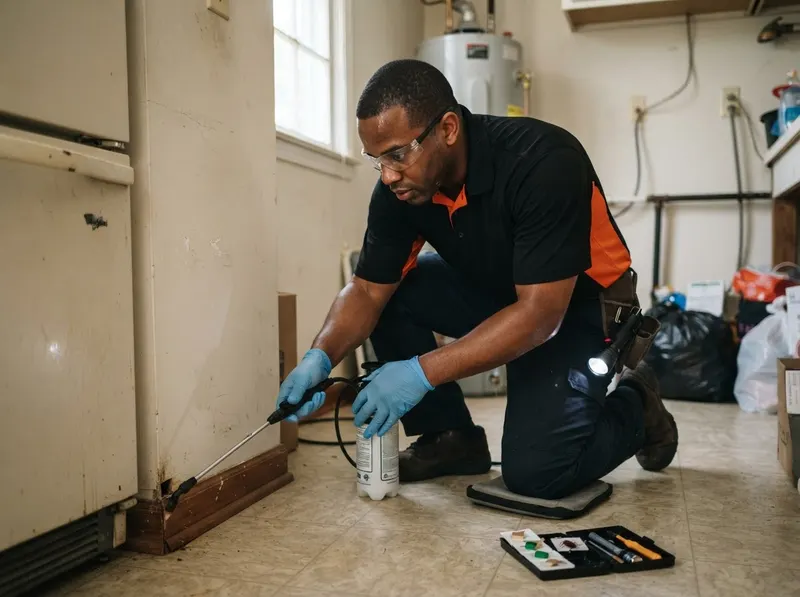
Smokybrown cockroaches (Periplaneta fuliginosa) and German cockroaches (Blattella germanica) require entirely different eradication protocols due to distinct biological nesting behaviors. German cockroaches measure 0.5 to 0.6 inches, breed exclusively indoors within dark, heated voids near water sources, and carry up to 40 embryos per egg case (ootheca). Smokybrown cockroaches reach 1.25 to 1.5 inches, thrive in decaying organic matter and high-humidity tree canopies, and enter through structural gaps in eaves, soffits, and crawlspaces. Over-the-counter synthetic pyrethroid aerosol foggers trigger behavioral scatter in German roaches, causing female specimens to drop egg capsules into interior wall insulation and cabinet joints, multiplying the infestation across living spaces.
In historic Atlanta neighborhoods such as Inman Park, Grant Park, Cabbagetown, and Midtown, architectural factors compound pest pressure. Turn-of-the-century heart pine framing, crawlspace foundations, and granite rubble footings offer unsealed avenues for exterior smokybrown roaches navigating dense oak canopies near Piedmont Park and Grant Park. In modern multi-family developments across Old Fourth Ward and high-rise residences in Buckhead, German roaches migrate through shared utility penetrations, plumbing chases, and hollow drywall partitions. Effective management requires identifying the precise lineage to deploy insect growth regulators that halt juvenile molting alongside targeted hydramethylnon or indoxacarb gel matrices, eliminating the nesting harborage without airborne chemical drift.
Treatment execution follows three distinct technical steps to ensure long-term domestic safety. Step one involves structural diagnostic mapping to measure humidity levels around plumbing lines and inspect electrical wall faceplates. Step two applies discrete, low-toxicity bait placements into inaccessible hinge recesses, appliance motor housings, and pipe collars, paired with mechanical HEPA vacuum extraction of live clusters. Step three implements perimeter exclusion, sealing exterior brick weep holes, foundation gaps, and rotted wood fascias common in historic bungalows across Virginia-Highland, Kirkwood, and West End. The operational trade-off centers on patience versus immediate displacement: non-repellent systemic baits take 7 to 14 days to circulate through aggregation sites via horizontal transfer, but avoid the indoor air contamination and rapid rebound associated with high-pressure aerosol spraying.
Every job gets a firm, written price after a free on-site visit.
Tell us about your smokybrown and german cockroach abatement job in Atlanta and we'll send a clear, written quote, usually the same day.
 Brass Lantern Pest Control